 Exosome RNA Exosome RNA Research & Industry News

Researchers from Sapienza University of Rome have developed a simple and scalable method to produce high-quality extracellular vesicles (EVs) from bovine milk. These milk-derived EVs (MEVs) are natural nanoparticles that can carry therapeutic molecules safely within the body, offering an eco-friendly and cost-effective alternative to synthetic drug delivery systems.
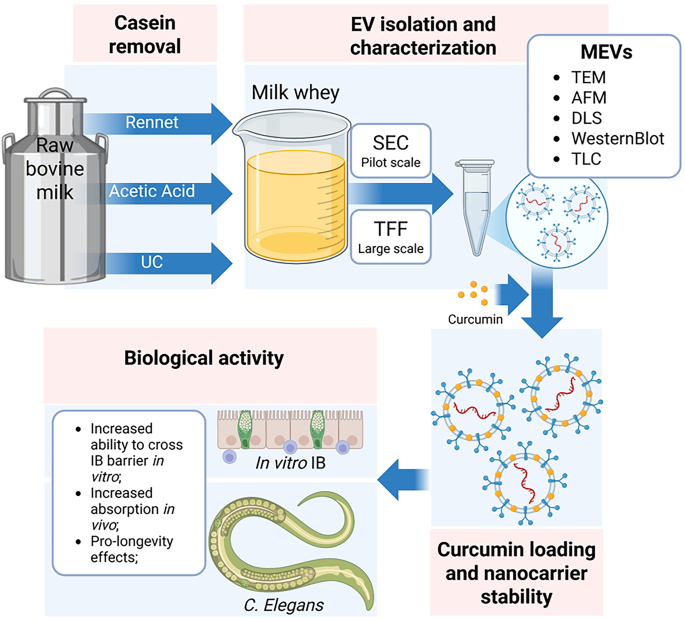
The team compared several casein removal methods to ensure purity and found that rennet treatment, a common enzyme used in cheese-making, produced the cleanest and most stable EVs. Using tangential flow filtration, they were able to isolate MEVs suitable for large-scale production. When these MEVs were loaded with curcumin, a plant compound known for its anti-inflammatory and antioxidant properties but poor absorption in the gut, the resulting CurMEVs significantly improved curcumin’s stability and bioavailability.
Even more exciting, these curcumin-loaded MEVs showed beneficial biological effects in laboratory models, including extending the lifespan of Caenorhabditis elegans, a microscopic worm often used in aging research. The study not only introduces a sustainable way to produce therapeutic nanocarriers from dairy by-products but also demonstrates the potential of exosomes as a foundation for future nutraceutical and pharmaceutical innovations.


