 Exosome RNA Exosome RNA Research & Industry News

Cell-derived small extracellular vesicles have been exploited as potent drug vehicles. However, significant challenges hamper their clinical translation, including inefficient cytosolic delivery, poor target-specificity, low yield, and inconsistency in production. Nanjing University researchers report a bioinspired material, engineered fusogen and targeting moiety co-functionalized cell-derived nanovesicle (CNV) called eFT-CNV, as a drug vehicle. The researchers show that universal eFT-CNVs can be produced by extrusion of genetically modified donor cells with high yield and consistency. They demonstrate that bioinspired eFT-CNVs can efficiently and selectively bind to targets and trigger membrane fusion, fulfilling endo-lysosomal escape and cytosolic drug delivery. They found that, compared to counterparts, eFT-CNVs significantly improve the treatment efficacy of drugs acting on cytosolic targets. The researchers believe that their bioinspired eFT-CNVs will be promising and powerful tools for nanomedicine and precision medicine.
Schematic of anti-GPC3 scoff and engineered fusogen
co-expressing eFT-CNVs for cytosolic delivery of therapeutics
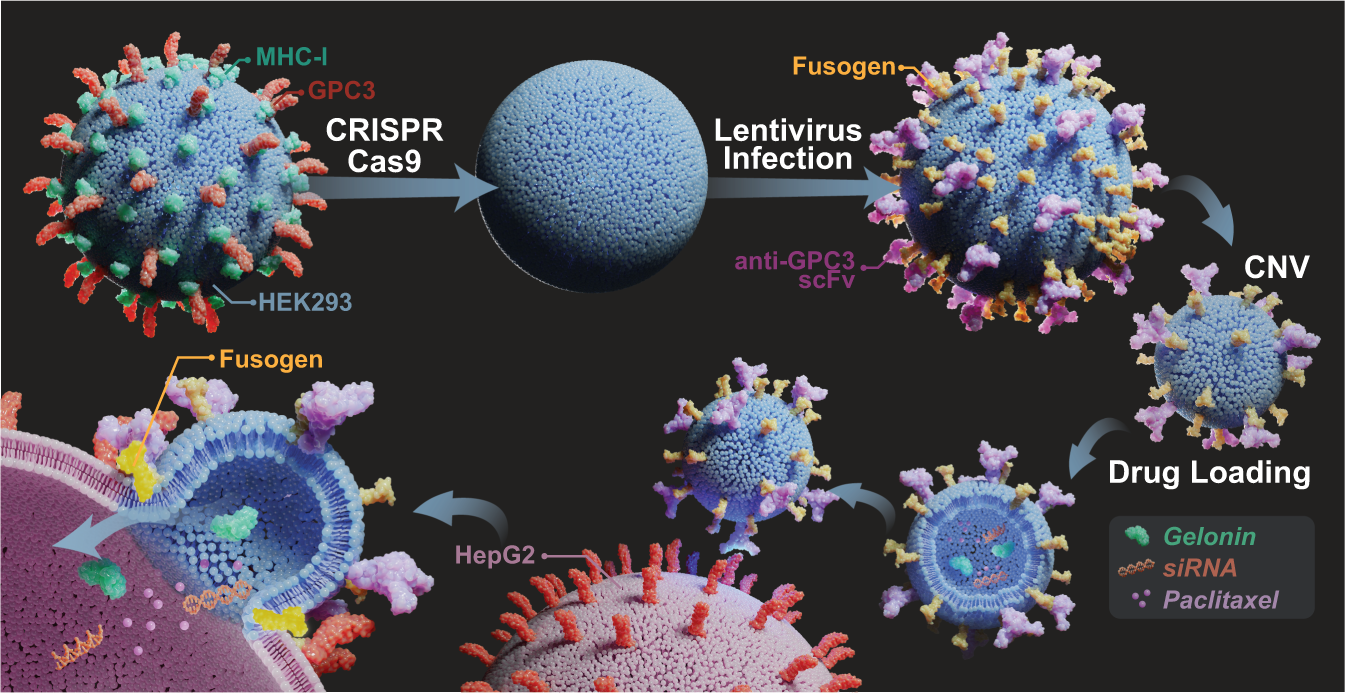
Intrinsic GPC3 and B2M are knocked out using CRISPR/Cas 9 followed by co-expressing anti-GPC3 scFv and engineered fusogen on HEK293 cell membranes. The eFT-CNVs are generated by mechanical extrusion of the donor cells and loaded with various drugs, e.g., nucleic acids, protein toxins, or chemotherapeutic agents, for on-target cytosolic delivery.


