 Exosome RNA Exosome RNA Research & Industry News

Probiotic Extracellular Vesicles (EVs) have become a hot topic in the field of microbiology and biotechnology due to their remarkable health benefits. These tiny, membrane-bound particles are produced by probiotic bacteria and have been shown to carry out a range of biological functions that can benefit our health. In a recent study, scientists have delved into the factors that influence the production and effectiveness of these vesicles, specifically those derived from Lacticaseibacillus rhamnosus, a common probiotic bacterium.
What Are Probiotic Extracellular Vesicles?
Extracellular vesicles are small particles released by cells into their environment. In the context of probiotics like Lactobacillus species, these vesicles are not just byproducts; they play a crucial role in the bacteria’s ability to affect our health. They can have anti-inflammatory and antimicrobial properties, meaning they can help reduce inflammation and fight off harmful microbes. In fact, recent research suggests that these vesicles might even be more effective than the probiotics themselves at modulating the immune system.
The Study’s Focus: Production and Function of Lacticaseibacillus rhamnosus-Derived EVs
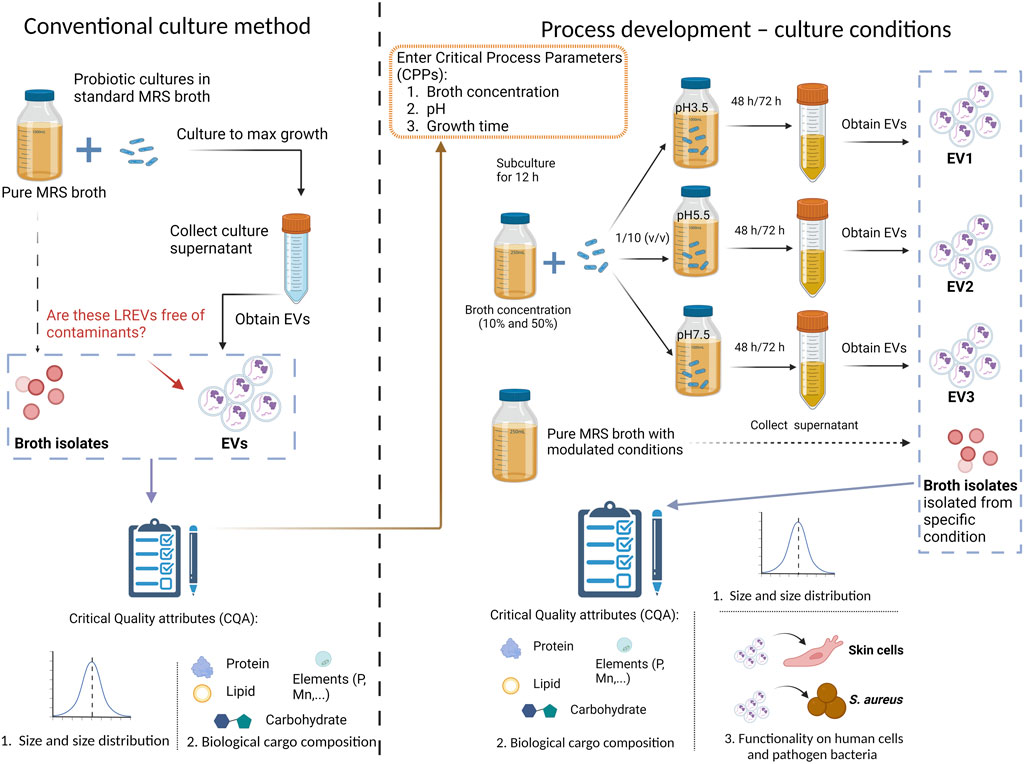
Researchers at the University of Sydney aimed to understand how different conditions during the growth of Lacticaseibacillus rhamnosus affect the production and quality of its extracellular vesicles. They explored three main factors:
- Culture Medium pH: The acidity or alkalinity of the growth medium.
- Growth Time: How long the bacteria are allowed to grow.
- Broth Concentration: The concentration of the culture medium.
By varying these factors, the team could investigate how environmental stresses impact the production and properties of the probiotic EVs.
Key Findings
- Environmental Impact: The study found that changes in pH, growth time, and broth concentration significantly influenced the production and composition of the extracellular vesicles. For example, altering the pH of the culture medium or adjusting the growth time affected how many vesicles were produced and their biochemical makeup.
- Biological Activity: The researchers also assessed the biological activities of the Lacticaseibacillus-derived EVs. They discovered that these vesicles were non-toxic to human skin cells (keratinocytes) and showed antimicrobial properties against Staphylococcus aureus, a common skin pathogen. This suggests that the vesicles could potentially be used to treat skin conditions or infections.
- Customization Potential: Understanding how different culture conditions affect the vesicles’ properties can lead to the development of customized probiotic-derived EVs. These customized vesicles could be tailored for specific medical and industrial applications, such as wound healing or enhancing skin health.
Why This Research is Important
This research highlights the importance of controlling the production environment to maximize the benefits of probiotic-derived extracellular vesicles. By fine-tuning growth conditions, scientists can improve the efficacy and safety of these vesicles, potentially leading to innovative treatments for various health conditions. As we learn more about how to optimize the production of these beneficial particles, we move closer to harnessing their full potential for enhancing human health and developing new therapeutic solutions.
In summary, the study sheds light on how environmental factors influence the production and functionality of probiotic extracellular vesicles. This knowledge opens up exciting possibilities for creating more effective probiotic-based treatments and underscores the importance of precise biomanufacturing processes in developing advanced health solutions.


