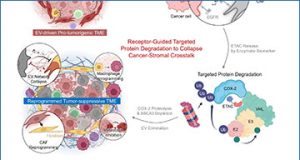
Extracellular vesicles help cancer cells communicate with surrounding stromal cells, and targeted protein degradation may disrupt this signaling network to suppress tumor growth...
Read More »Exercise-enriched extracellular vesicles may help maintain aging cartilage
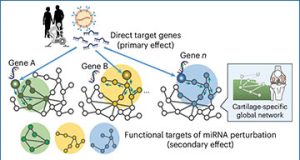
Exercise alters extracellular vesicles by enriching microRNA-29, which may support healthier aging cartilage through regulation of the longevity...
Read More »An anti-fibrotic drug could be repurposed to control cell communication
SD-208 reduced extracellular vesicles release by redirecting CD63-positive vesicle compartments toward lysosomes, revealing a potential new way...
Read More »Electronic profiling of neuronal extracellular vesicles enables early prediction of Parkinson’s disease
Neuronal extracellular vesicles carrying distinct alpha-synuclein forms may provide a blood-based source of biomarkers for earlier and less invasive...
Read More »A Tiny Worm Helps Scientists Unravel a Genetic Clue to Kidney Disease
Extracellular vesicles and ciliary signaling in C. elegans help reveal how an ADPKD-associated mutation disrupts polycystin protein localization...
Read More »Found in the Dark: How AI Helped Reveal a Hidden Cellular Communication Network
TM184C regulates intercellular vesicle exchange and autophagy, offering insights relevant to extracellular vesicles, cell communication, and mechanisms that may contribute to disease...
Read More »Fungal infections: A surprising downside of the immune response
Neutrophil-derived extracellular vesicles can coat Candida albicans and reduce fungal uptake by immune cells, revealing an unexpected role for EVs in host-pathogen interactions...
Read More »Extracellular vesicles help shape neural development in EPM1 epilepsy
Extracellular vesicles carrying Sonic Hedgehog help guide neural development, while disrupted EV signaling in EPM1 may alter neuronal identity and...
Read More »Neutrophil extracellular vesicles may help Candida albicans evade immune attack
Neutrophil-derived extracellular vesicles can coat Candida albicans and reduce phagocytosis, revealing an unexpected mechanism that may help fungal...
Read More »Gut bacteria may communicate differently with the human body in patients with Parkinson’s disease
Gut microbiota-derived extracellular vesicles differ in abundance, size, bacterial origin, and protein cargo in Parkinson’s disease, suggesting altered microbial...
Read More »
Exosome RNA Exosome RNA Research & Industry News