Exosome RNA Exosome RNA Research & Industry News

Researchers at Jiangsu University have explored recent advancements in exosome-based liquid biopsy technology. Their work covers various aspects, including how to isolate and enrich exosomes, detect their cargo, and analyze the results. They also compare the different methods currently available, highlighting the strengths and weaknesses of each approach. Additionally, they provide insights into the potential future applications of these strategies in clinical settings.
Cancer diagnosis has traditionally relied on tissue biopsies, which involve taking a small sample of tissue from the tumor. While effective, this invasive procedure can be uncomfortable for patients and may carry risks. An exciting alternative is liquid biopsy, a minimally invasive method that uses biofluid samples—like blood or urine—to detect cancer. One of the key players in liquid biopsy is exosomes, small vesicles that cells release into the bloodstream and other body fluids.
What Are Exosomes?
Exosomes are tiny extracellular vesicles secreted by various types of cells. Think of them as little “messages in a bottle” that carry important information from one cell to another. They play a significant role in intercellular communication, helping to relay signals that can affect health and disease. Because exosomes contain proteins, lipids, and RNA that reflect the condition of their parent cells, they have emerged as promising biomarkers for cancer detection through liquid biopsy.
The Challenge of Isolating Exosomes
Despite their potential, traditional methods for isolating exosomes and detecting their contents can be quite labor-intensive and inefficient. These limitations hinder the practical application of exosome-based liquid biopsy in clinical settings. Scientists have recognized the need for better techniques that can streamline the process, making it faster and more effective.
Innovative Approaches to Exosome Detection
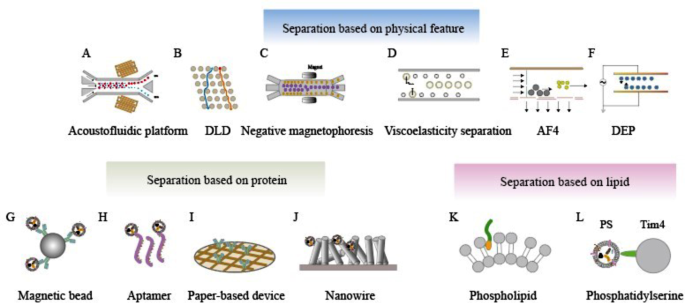
Over the past few decades, researchers have developed several new strategies to improve the isolation and analysis of exosomes. Here are some of the most promising methods:
- Microfluidic Chips: These small devices can manipulate tiny volumes of fluids, allowing for the rapid separation of exosomes from other components in blood or urine. They provide a controlled environment for exosome isolation, making the process faster and more efficient.
- Nanowire Arrays: By using nanoscale wires, scientists can enhance the detection of exosomes based on their unique surface properties. This method increases sensitivity, making it easier to identify and analyze exosomes even in small samples.
- Electrochemical Biosensors: These sensors utilize electrical signals to detect specific molecules in exosomes. By integrating these biosensors with exosome isolation techniques, researchers can achieve real-time analysis, which can significantly speed up the diagnostic process.
Advancements in Exosome-Based Liquid Biopsy Technology
A recent review has explored these innovative strategies in detail, highlighting the progress made in exosome-based liquid biopsy technology. It discusses various methods for isolating and enriching exosomes, as well as techniques for detecting and analyzing their cargo. The review also compares the currently available methods, providing insights into their advantages and limitations.
Looking Ahead: Future Applications
The advancements in exosome-based liquid biopsy technology offer exciting possibilities for cancer diagnosis and monitoring. By overcoming the limitations of traditional methods, these new strategies could facilitate the early detection of cancer, monitor treatment response, and potentially lead to more personalized medicine.
In summary, exosomes are paving the way for a new era in cancer diagnosis through liquid biopsy. As researchers continue to refine isolation and detection methods, the goal is to make these technologies widely accessible in clinical settings. With the promise of non-invasive testing and rapid results, exosome-based liquid biopsy could significantly improve patient care and outcomes in the fight against cancer.