 Exosome RNA Exosome RNA Research & Industry News

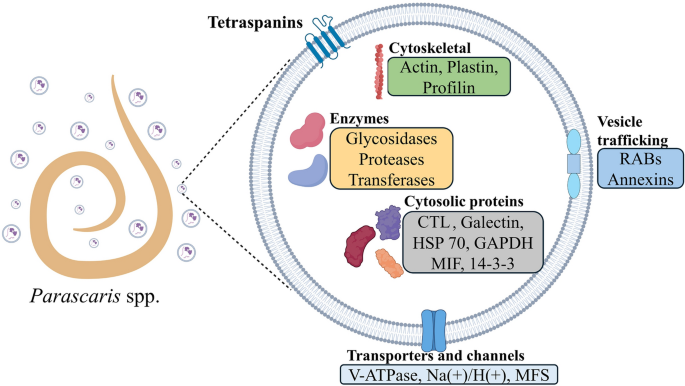
Parascaris spp. are parasitic worms that pose serious health risks to horses, especially young foals. These parasites live for a long time in their hosts by manipulating the immune system to avoid being detected and eliminated. But how do these worms pull off such clever immune evasion? Recent research suggests that part of the answer lies in tiny structures they release called extracellular vesicles (EVs). EVs are like tiny packages that cells use to send information to one another. For parasites like Parascaris, these vesicles could play a key role in how they communicate with the host’s immune system to ensure their survival.
How Do Researchers Study Parascaris EVs?
To study these tiny packages, researchers at Purdue University first collected live adult male and female Parascaris worms. They isolated the EVs from the worms using a technique called ultracentrifugation, which separates small particles by spinning them at high speeds.
Once isolated, the EVs were examined using nanoparticle tracking analysis and electron microscopy to confirm their size, concentration, and structure. The next step involved analyzing the proteins inside these EVs using a powerful technique called mass spectrometry (LC-MS/MS). This allowed the researchers to determine which proteins were present and whether their functions differed between male and female worms.
Key Findings: What Do Parascaris EVs Contain?
The team discovered 113 different proteins in the EVs released by the worms. Some of these proteins were similar to those found in other parasitic helminths and were known to play roles in modulating the immune system. This suggests that these proteins help Parascaris worms control their host’s immune response, giving them a better chance of survival inside the host.
One of the most interesting discoveries was the sex-specific differences in the EV protein content. Female worms’ EVs contained C-type lectins, proteins that are known to play roles in immune regulation. This suggests that female worms might use different strategies to influence the host’s immune system compared to males.
Biological Pathways: Differences Between Male and Female Worms
The study also revealed key differences in the biological functions of the proteins in male and female EVs. Using Gene Ontology (GO) and KEGG pathway analysis, the researchers found that while both male and female worms share similar metabolic processes, they differ in how they regulate signal transduction, cell growth, and cell death. This indicates that male and female Parascaris worms may influence their host’s biology in distinct ways.
Why Does This Research Matter?
Understanding the molecular strategies that parasites use to manipulate their host can lead to new ways of managing infections. By identifying the specific proteins and pathways involved, researchers can explore potential targets for new treatments or preventive strategies.
This study highlights the complexity of parasitic EVs and shows that there are sex-specific strategies at play. Moving forward, this research opens new avenues for discovering innovative ways to manage helminth infections—not just in horses but potentially in other animals and humans too.
Final Thoughts
Parascaris worms demonstrate how parasites can cleverly use molecular tools to manipulate their host’s immune system. The discovery of sex-specific differences in their EVs adds a new layer of understanding to how these parasites function. By continuing to study these tiny but powerful vesicles, researchers may develop more effective strategies to combat parasitic infections—helping protect both animal and human health.


