 Exosome RNA Exosome RNA Research & Industry News

Human milk is more than just a source of nutrition for newborns—it’s a powerhouse of bioactive molecules that help protect babies, especially premature infants, from inflammatory diseases. One of the key components in human milk are extracellular vesicles (EVs), tiny particles that carry important molecules like microRNA. These molecules can influence immune signaling, offering potential protection against conditions like necrotizing enterocolitis (NEC), a dangerous gut disease in premature infants.
What Are EVs and Why Are They Important?
Extracellular vesicles are small particles secreted by cells that contain various bioactive molecules. In human milk, these EVs can deliver important messages to the cells of the newborn, particularly in the gut and immune system. They act like little “packets” that transport molecules, such as microRNA, to different parts of the body. These molecules can influence how cells communicate, especially in terms of immune responses.
The Impact of EVs in Term vs. Preterm Infants
In this study, researchers at the University of Ottawa looked at the effects of EVs from both term (full-term) and preterm (premature) human milk on cells from the human intestine and immune system. The goal was to understand whether these EVs could influence immune-related signaling and cell death in different ways, based on the gestational age of the baby.
The researchers found that both term and preterm milk EVs played important roles in modulating the immune system. Specifically:
- Preterm EVs were found to have more CD14 markers, which are linked to immune cell recognition.
- Both types of EVs helped to increase the secretion of epidermal growth factor (EGF), a protein that promotes cell growth and repair.
However, the most interesting findings were in how these EVs responded to inflammation:
- Term EVs were particularly effective at reducing the secretion of IL-6, a protein involved in inflammation, in human intestinal cells.
- In macrophages (a type of immune cell), term EVs also reduced the production of IL-1β, another inflammatory molecule.
- Both term and preterm EVs helped to lower IL-1β secretion and reduced cell death associated with inflammation.
Characterization and super-resolution imaging of
CD9, CD63, CD81, and CD14 HM EV surface markers
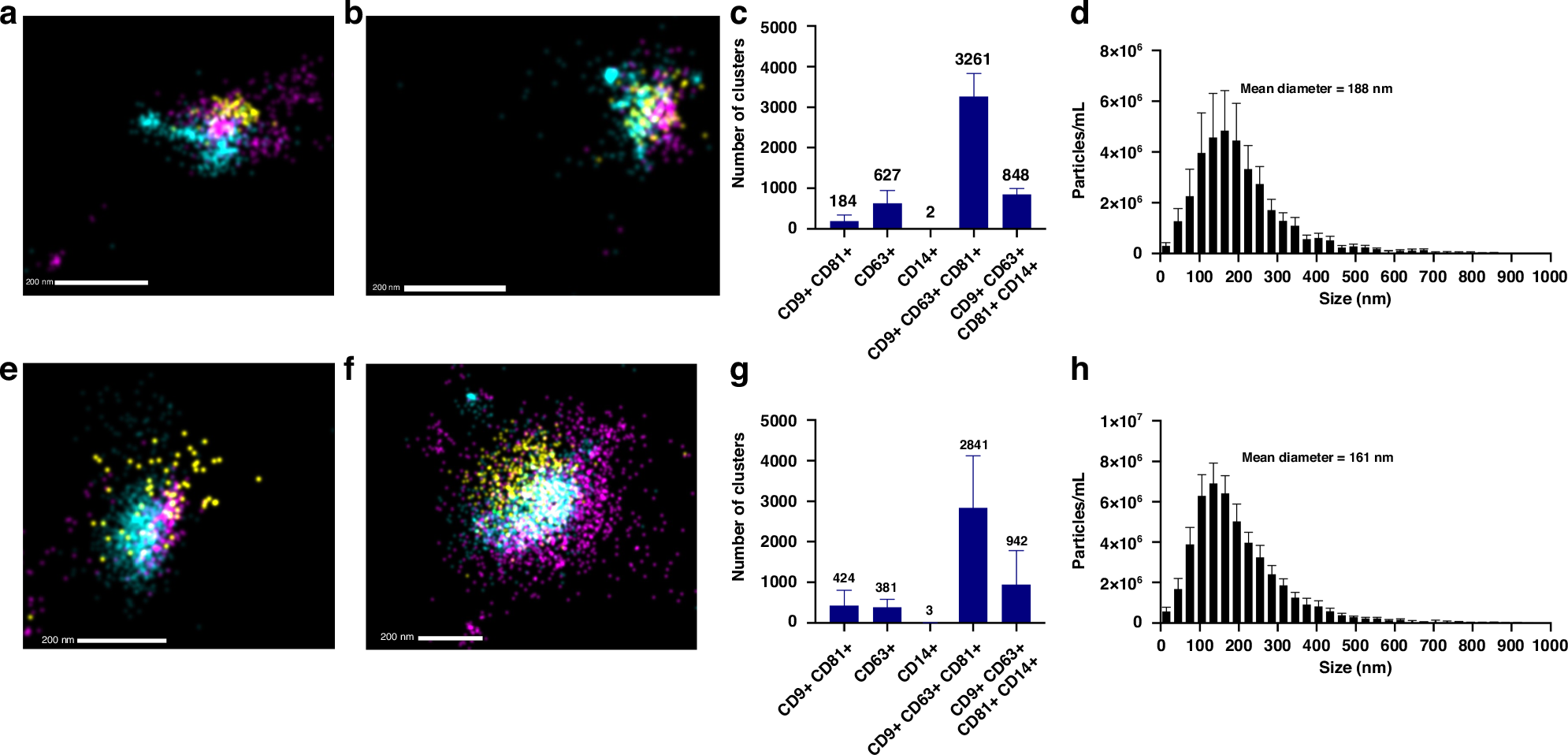
Term (a–c) and preterm (e–g) HM EVs are positive for CD14 (yellow); in addition to canonical EV markers CD63 (cyan), 81 and 9 (purple). The positive fluorescence signal per cluster of EVs did not differ significantly between term (c) and preterm (g) EVs. n = 2, term and preterm HM EVs. Histograms represent average from three fields of view per sample. d, h Particle size distribution measured using Zetaview. The mean EV diameter was 188 nm for term (d) and 161 nm (h) for preterm HM EVs, n = 8.
How Do These Findings Help?
The study suggests that the microRNA carried by EVs plays a crucial role in regulating immune responses. By carrying these molecules, EVs help promote a balanced immune system, reducing inflammation and promoting tolerance to prevent overreaction in the body. This is especially beneficial for newborns, whose immune systems are still developing.
For premature infants, who are at higher risk for diseases like NEC, feeding them human milk that contains these protective EVs could help their immune systems develop more effectively. Term milk, with its unique EV profile, may offer even more targeted immune benefits, potentially aiding in the prevention of harmful inflammation.
Looking Ahead: A Potential Therapeutic Approach
These findings open the door to new research on how we might use EVs as a therapeutic tool for vulnerable newborn populations, particularly preterm infants. If researchers can harness the power of EVs from human milk, there may be a way to supplement babies’ diets with these bioactive molecules to help boost their immune systems, reduce inflammation, and improve their chances of healthy development.
In summary, human milk EVs are much more than just a vehicle for nutrients—they carry important signals that can help shape the immune system of newborns, offering protection against harmful diseases. As we continue to learn more about how EVs work, we may discover new ways to use them in clinical settings to improve the health and well-being of our most vulnerable populations.


