Exosome RNA Exosome RNA Research & Industry News

Pathological calcification occurs when calcium phosphate minerals accumulate in soft tissues where they do not normally belong. This process is associated with several diseases, including cardiovascular disorders and osteoarthritis. Although calcification is harmful in these tissues, it shares many similarities with normal bone formation and growth plate development.
One important part of this process involves extracellular vesicles, tiny membrane-bound particles released by cells. These vesicles help transport proteins, lipids, and signaling molecules between cells and can influence how minerals are deposited in tissues.
In a recent publication, researchers from the University of São Paulo in Brazil investigated two types of extracellular vesicles involved in mineralization: exosomes and matrix vesicles. While both originate from the same mineralizing cells, previous research has shown that they differ in composition and biological function.
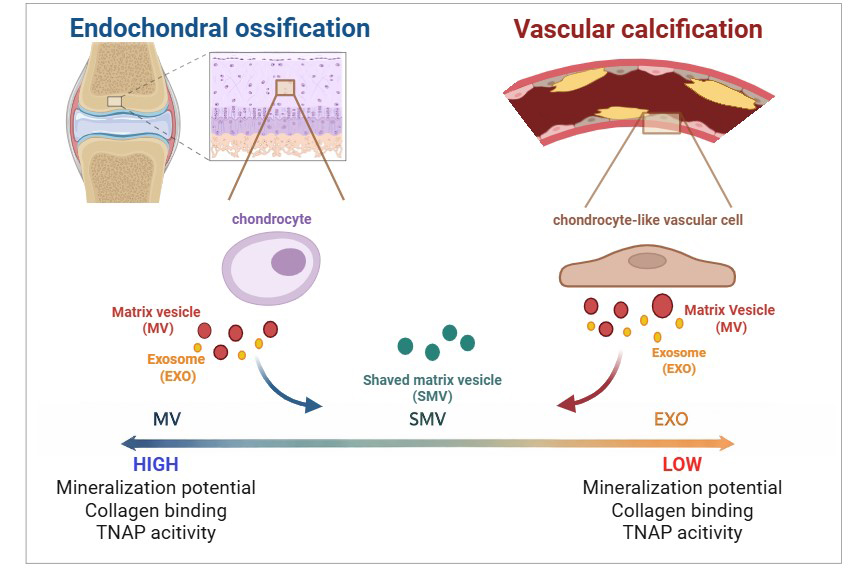
The researchers focused on understanding how these vesicles contribute to both normal mineralization and pathological calcification. In particular, they examined the role of the protein corona, a layer of proteins that associates with the surface of extracellular vesicles and may influence their behavior.
To perform the analysis, the team isolated exosomes and matrix vesicles from vascular smooth muscle cells and compared them with vesicles obtained from chondrocytes, the cells responsible for cartilage formation. They also created “shaved” matrix vesicles by removing surface-associated proteins, allowing them to directly evaluate the importance of the protein corona.
The results revealed clear differences between exosomes, matrix vesicles, and shaved matrix vesicles. Although shaved matrix vesicles retained the ability to promote mineralization, the process occurred more slowly and less efficiently than with intact matrix vesicles. These findings suggest that proteins attached to the vesicle surface play an important role in controlling how effectively mineralization occurs.
The researchers also found evidence that the protein corona influences how matrix vesicles interact with collagen, a major structural component of connective tissues. This interaction may be important for directing where mineral deposits form within tissues.
The work highlights the distinct biological roles of exosomes and matrix vesicles during calcification. While both are extracellular vesicles, matrix vesicles appear to possess specialized features that make them particularly effective at initiating mineral formation.
Importantly, the authors established a versatile experimental platform that can be used to further investigate pathological calcification. A better understanding of how extracellular vesicles regulate mineralization may help researchers identify new therapeutic strategies for conditions involving abnormal calcium deposition, including vascular calcification and osteoarthritis.
As interest in extracellular vesicles continues to grow, studies like this provide valuable insights into how different vesicle populations contribute to both normal physiology and disease processes.