 Exosome RNA Exosome RNA Research & Industry News

Pancreatic cancer is one of the deadliest cancers, largely because it’s rarely caught early. The ability to detect it non-invasively at an early stage could drastically improve patient outcomes. A team at the University of Florida has developed a novel method that may bring us closer to that goal by focusing on tiny biological messengers called extracellular vesicles (EVs).
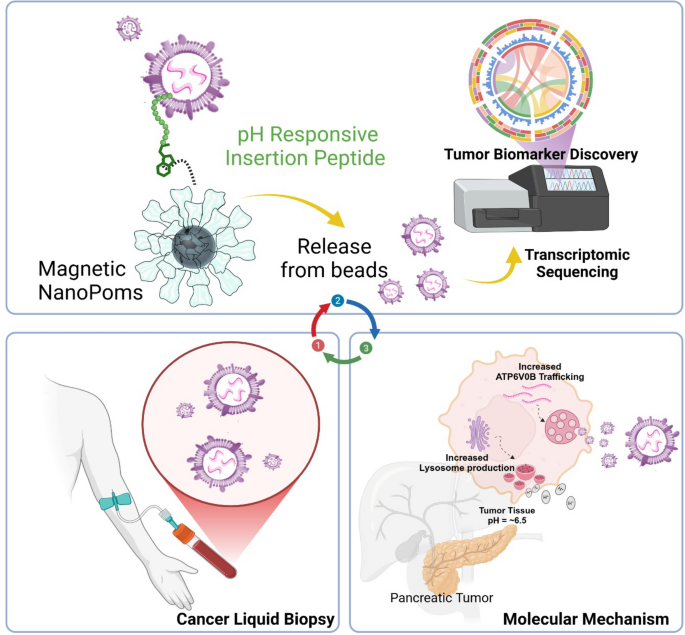
EVs are small particles released by cells into the bloodstream, carrying important biomolecules like RNA and proteins. Because they reflect what’s happening inside the cells they come from, including cancer cells, they have huge potential for use in early cancer diagnosis through a simple blood test, also known as a liquid biopsy. However, one major challenge has been isolating pure and consistent EV populations from complex blood samples. Different extraction methods can result in EVs with very different contents, which can mislead researchers and confuse efforts to identify cancer biomarkers.
To overcome this, the researchers introduced a new isolation technique using pH-responsive peptides bound to magnetic NanoPom beads, called ExCy. This system isolates a more uniform and reliable set of EVs. Even more importantly, they developed the ExoQuality Index (EQI), a statistical tool that evaluates the quality and consistency of the isolated EVs using data from multiple types of tests. This helps ensure that the EVs being studied are genuinely useful for identifying cancer biomarkers.
Using next-generation RNA sequencing on EVs isolated from pancreatic cancer patients, the researchers identified a promising biomarker called ATP6V0B. They validated this marker in a pilot study of 22 plasma samples, including samples from both pancreatic cancer patients and healthy individuals. Their results were impressive, showing high accuracy in distinguishing cancer from non-cancer cases, with diagnostic models reaching AUC scores of 0.86 to 0.88, a strong performance for a potential early diagnostic test.
By combining a more precise EV isolation method with rigorous quality control, this approach paves the way for more reliable liquid biopsies to detect pancreatic cancer early, when treatment has the best chance of success.


