Exosome RNA Exosome RNA Research & Industry News

Cancer is a complex disease that often progresses and spreads to other parts of the body, making early detection and treatment a significant challenge. Researchers at the University of Texas MD Anderson Cancer Center discuss the growing interest of extracellular vesicles (EVs) in cancer research. These tiny, cell-derived particles play a crucial role in cell communication and have become a key focus for understanding how cancer develops, spreads, and how it might be treated more effectively.

What Are Extracellular Vesicles (EVs)?
Extracellular vesicles (EVs) are small, membrane-bound particles that are released by cells into the surrounding environment. They contain various biomolecules such as proteins, lipids, and RNA, which can influence other cells they encounter. This makes EVs important for cell-to-cell communication in both healthy and diseased states, including cancer.
In cancer, EVs can carry information from cancer cells to nearby stromal cells (cells that form the supportive tissue around tumors), influencing the tumor environment and helping tumors grow and spread. This process plays a significant role in cancer progression and metastasis (when cancer spreads to other parts of the body).
EVs as Tools for Cancer Diagnosis
One of the exciting possibilities of EVs in cancer research is their potential use in real-time monitoring of cancer. Since EVs carry molecules from cancer cells, analyzing the contents of these vesicles can provide valuable insights into the status of a tumor without the need for invasive biopsies. This could lead to better diagnostic techniques, allowing for early detection of cancer and continuous monitoring of its progression or response to treatment.
EVs for Targeted Cancer Treatment
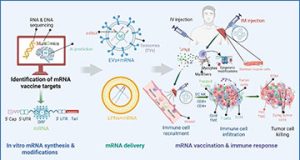
EVs not only play a role in cancer progression but can also be used as delivery systems for cancer therapies. In the tumor microenvironment (TME), cancer cells and nearby cells exchange EVs, and these vesicles can carry therapeutic molecules directly to the cancer cells. This delivery method can be more precise and less toxic than traditional treatments, as it targets the cancer cells specifically, leaving healthy cells unharmed.
Additionally, EVs can be engineered to carry drugs or other therapeutic agents, making them an even more powerful tool in the fight against cancer. These engineered EVs could be used to deliver treatments directly to tumors, improving the effectiveness of cancer therapies while minimizing side effects.
Engineering EVs for Better Treatment
Researchers are also exploring how to engineer EVs to make them more effective for cancer therapy. By modifying the content of the EVs or altering their surface properties, scientists can create EVs that are more effective at targeting specific types of cancer cells or that can deliver larger amounts of therapeutic agents. This approach could lead to new, highly targeted cancer treatments that are both effective and minimally invasive.
Conclusion
Extracellular vesicles are at the forefront of cancer research, offering new opportunities for diagnosis and treatment. With their ability to provide real-time insights into cancer progression and their potential as delivery vehicles for targeted therapies, EVs hold immense promise in improving cancer care. As research continues, the use of EVs could transform how we detect, monitor, and treat cancer, offering new hope for better outcomes and more personalized treatment strategies.