Exosome RNA Exosome RNA Research & Industry News

Extracellular vesicles (EVs) are tiny membrane-bound particles released by cells into blood and other body fluids. They carry proteins, lipids, RNA, and other molecules that can provide clues about what is happening inside the body. Because of this, researchers are increasingly studying EVs as potential biomarkers for disease and as a way to better understand communication between cells.
Most blood-based EV research, however, focuses on plasma rather than whole blood. This can leave out vesicles associated with blood cells and other components removed during plasma preparation. Researchers have now developed an optimized method for enriching EVs directly from untreated whole blood, potentially opening a much larger source of biological information for research.
The work was led by researchers at the University of Lleida in Spain. The researchers adapted a technique called PRotein Organic Solvent PRecipitation, or PROSPR, to rapidly isolate EVs from small volumes of whole blood.
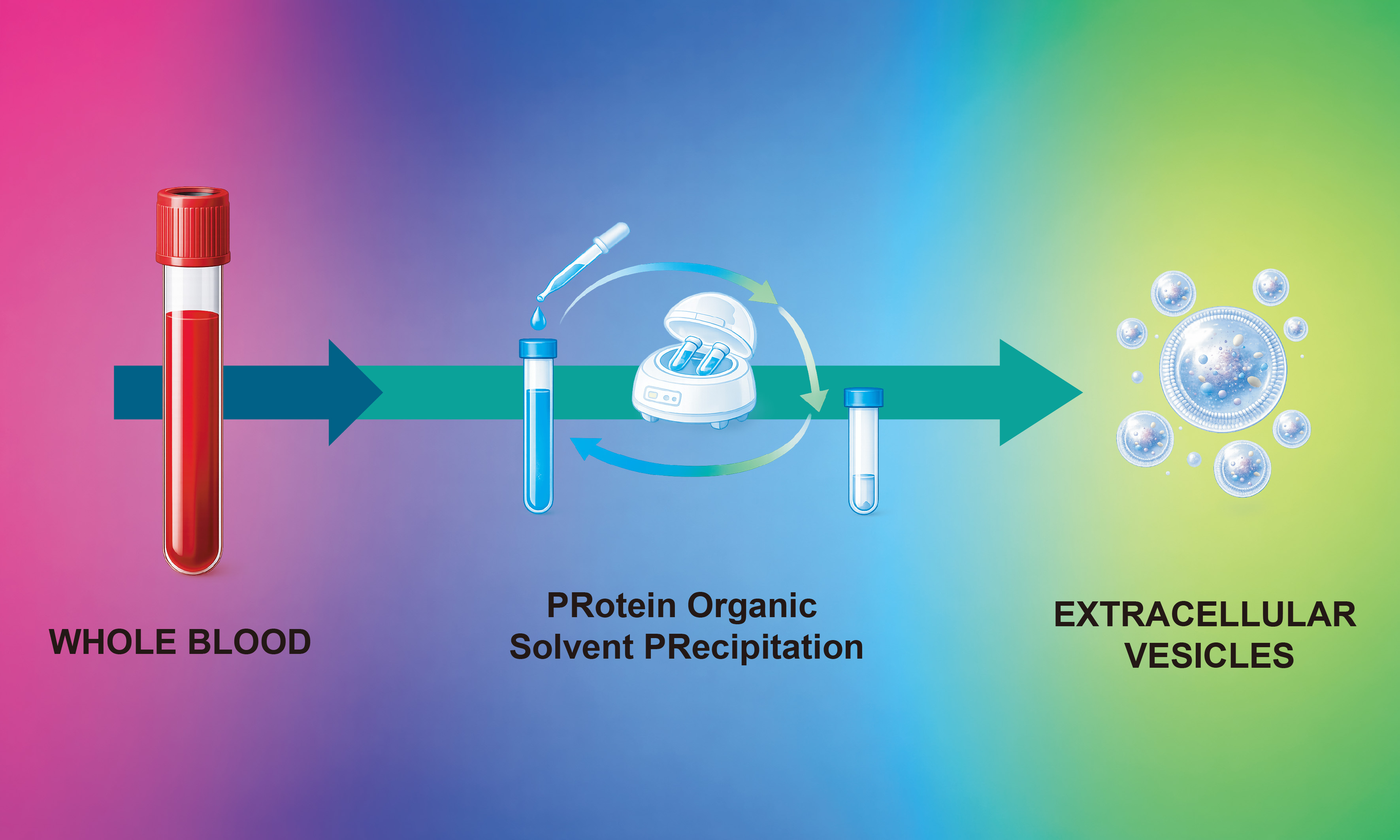
Enriching extracellular vesicles directly from blood
One challenge in EV research is separating vesicles from the many proteins, lipids, cells, and other particles naturally present in blood. The researchers optimized the PROSPR workflow to enrich EVs while removing many of these unwanted components.
They tested blood volumes of 50, 100, and 200 microliters and found that 200 microliters provided the best combination of EV recovery and purity. The resulting preparations contained intact vesicles and showed little evidence of contamination from free proteins or lipoprotein aggregates.
The researchers characterized the extracellular vesicles using several complementary technologies, including dedicated flow cytometry, tunable resistive pulse sensing, and transmission electron microscopy. These techniques allowed them to examine EV concentration, size, structure, and membrane characteristics.
Transmission electron microscopy showed intact, spherical membrane-bound vesicles, while measurements of their electrical properties indicated that the vesicle membranes remained stable during isolation.
Whole blood reveals EV cargo that plasma can miss
The researchers also used high-depth proteomics and lipidomics to investigate the molecular cargo carried by the isolated vesicles. Proteomics examines large numbers of proteins, while lipidomics provides a similar broad analysis of lipids.
The whole-blood EV preparations contained distinctive combinations of proteins and lipids. Importantly, some of these molecular signatures were associated with platelets and mitochondria and were not detected in EVs isolated from corresponding plasma samples.
This suggests that relying exclusively on plasma may provide an incomplete view of the body’s circulating EV population. Whole-blood EV analysis could complement plasma-based approaches by capturing additional vesicles and molecular information that would otherwise be lost during plasma preparation.
Giving archived blood samples new research value
Another important application involves biobanks. Large numbers of whole-blood samples are stored in research and clinical biobanks around the world, but these specimens have been relatively underused for extracellular vesicle research.
Because PROSPR can work directly with relatively small volumes of untreated blood, the method could allow researchers to investigate EVs in existing archived samples. These collections may include specimens gathered from patients over many years and across numerous diseases.
Access to these samples could expand opportunities for EV-based proteomic and lipidomic research, particularly for identifying circulating biomarkers associated with disease development, progression, or treatment response.
Rather than replacing plasma EV analysis, the researchers describe whole-blood PROSPR as a complementary approach that can increase the amount of biological information available from blood. By making it easier to extract and analyze extracellular vesicles from whole blood, the method could help researchers make greater use of existing biobank resources while uncovering molecular signals that conventional plasma analysis may overlook.