Exosome RNA Exosome RNA Research & Industry News

Delivering drugs effectively is a major challenge in medicine, especially when it comes to complex molecules like peptides. These molecules are often difficult to administer orally because they can be broken down or absorbed poorly in the digestive system. However, an innovative approach is making waves in the field: using milk-derived extracellular vesicles for oral drug delivery.
What Are Extracellular Vesicles?
Extracellular vesicles (EVs) are tiny particles released by cells into bodily fluids. Think of them as small, bubble-like carriers that transport various molecules, including proteins, lipids, and RNA, between cells. These vesicles can protect their cargo from degradation and facilitate its delivery to specific cells or tissues.
Milk as a Source of Extracellular Vesicles
Recent research has found that milk, a common and readily available substance, is rich in extracellular vesicles. These milk-derived EVs have unique properties that make them suitable for delivering drugs. The Tiny Cargo Company has harnessed this natural resource to develop a new method for producing large quantities of these vesicles.
XoLacta: A Breakthrough in Oral Therapy
The Tiny Cargo Company has introduced XoLacta, an innovative oral therapy designed to reduce the side effects of radiation therapy. Radiation therapy, while effective at treating cancer, often comes with unpleasant and harmful side effects. XoLacta uses milk-derived EVs to deliver therapeutic molecules that can help mitigate these side effects.
How Does It Work?
- Production of Milk-Derived EVs: The Tiny Cargo Company has established a workflow for producing large amounts of extracellular vesicles from milk. This process involves extracting and purifying the EVs to ensure they are suitable for drug delivery.
- Loading the Cargo: The next step involves loading these vesicles with therapeutic molecules, such as peptides that can help manage the side effects of radiation therapy.
- Oral Administration: Once prepared, the EVs carrying the therapeutic molecules are delivered orally. Because the vesicles protect their cargo from being broken down in the digestive system, they can effectively deliver the therapeutic agents where they are needed.
Tiny Cargo’s path to industrial production of freeze-dried
small extracellular vesicles in kilogram quantities
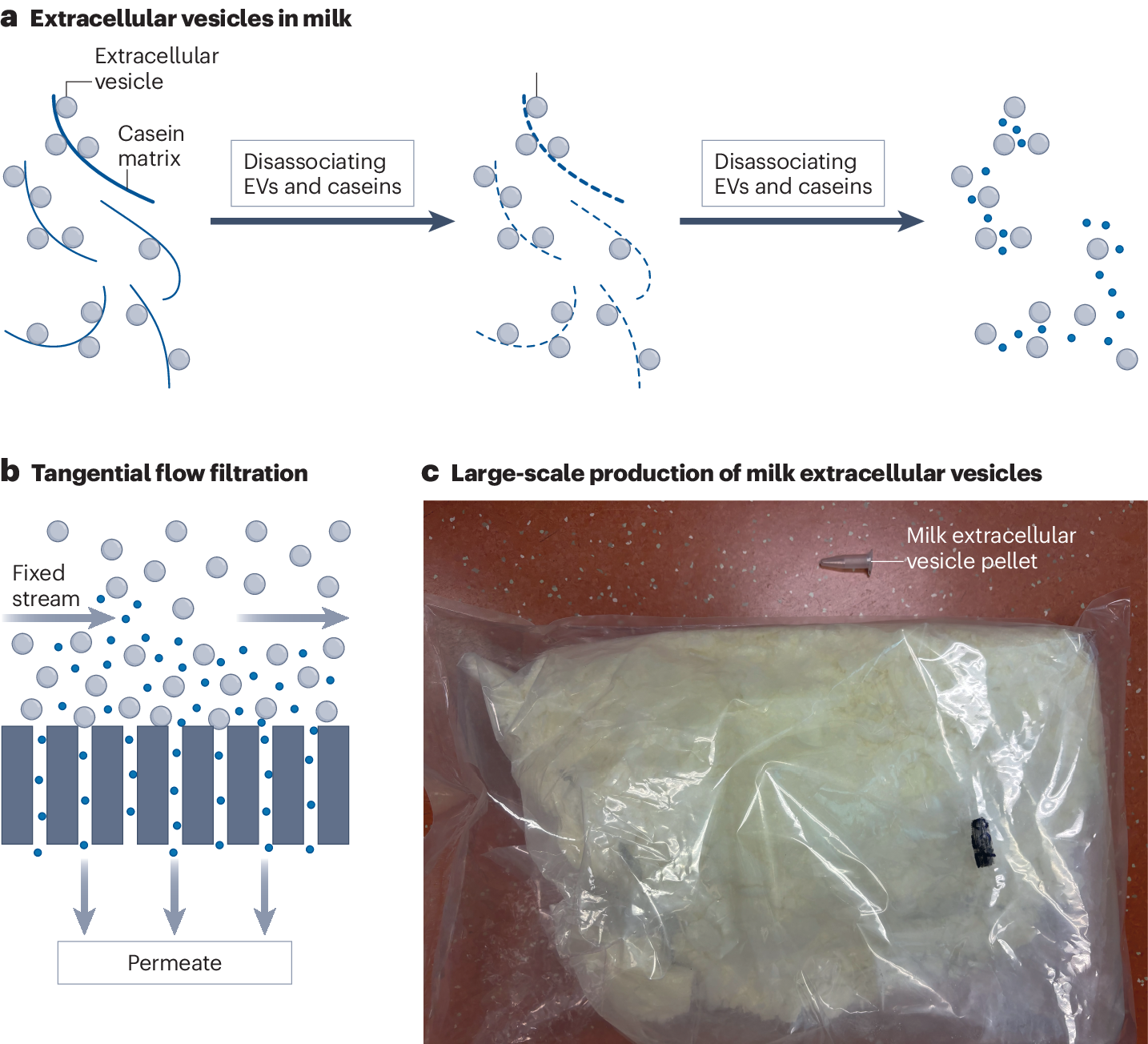
a, Casein forms a matrix in milk to which milk extracellular vesicles (EVs) selectively adhere. Tiny Cargo has developed methods for breaking this association using a non-toxic, food-safe approach, with a treatment step that disassociates caseins and EVs. b, This is followed by tangential flow filtration to produce kilograms of milk EVs. c, A tube containing a milk EV pellet, generated by an ultracentrifugation-based protocol, is placed next to a bag containing 1.5 kg of milk EVs isolated by our filtration-based method. Panel c image is courtesy of the Tiny Cargo Company.
Advantages of Using Milk-Derived EVs
- Natural and Abundant Source: Milk is a plentiful and non-invasive source of EVs, making it an ideal candidate for large-scale production.
- Protective Vehicle: EVs shield their cargo from harsh digestive conditions, improving the chances that the therapeutic molecules will reach their target.
- Reduced Side Effects: By using milk-derived EVs to deliver therapeutic agents, XoLacta aims to reduce the negative side effects associated with traditional treatments.
The use of milk-derived extracellular vesicles for drug delivery represents a significant advancement in medicine. By leveraging the natural properties of milk, researchers and companies like Tiny Cargo are making it possible to develop effective oral therapies for complex molecules. XoLacta is a prime example of how innovative science and technology can work together to improve patient care and reduce the side effects of challenging treatments. This approach opens up new possibilities for delivering drugs more effectively and safely, bringing hope for better therapeutic options in the future.