Exosome RNA Exosome RNA Research & Industry News

During pregnancy, tiny particles called extracellular vesicles are released by many cell types, but those coming from the placenta play especially important roles in communication between mother and fetus. These placenta-derived EVs act like biological mail carriers, delivering messages in the form of proteins, RNAs, lipids and even neurotransmitters that can influence how both the mother’s body adapts to pregnancy and how the fetus develops, including its brain.
Researchers from the University of Rochester describe how placental EVs are produced by trophoblast cells that form the interface between mother and fetus. These particles can cross natural barriers such as the placenta itself and the blood-brain barrier, potentially affecting nerve cell formation, how cells decide their function, and how different brain regions are organized during development.
Placental EVs as mediators of maternal and fetal health
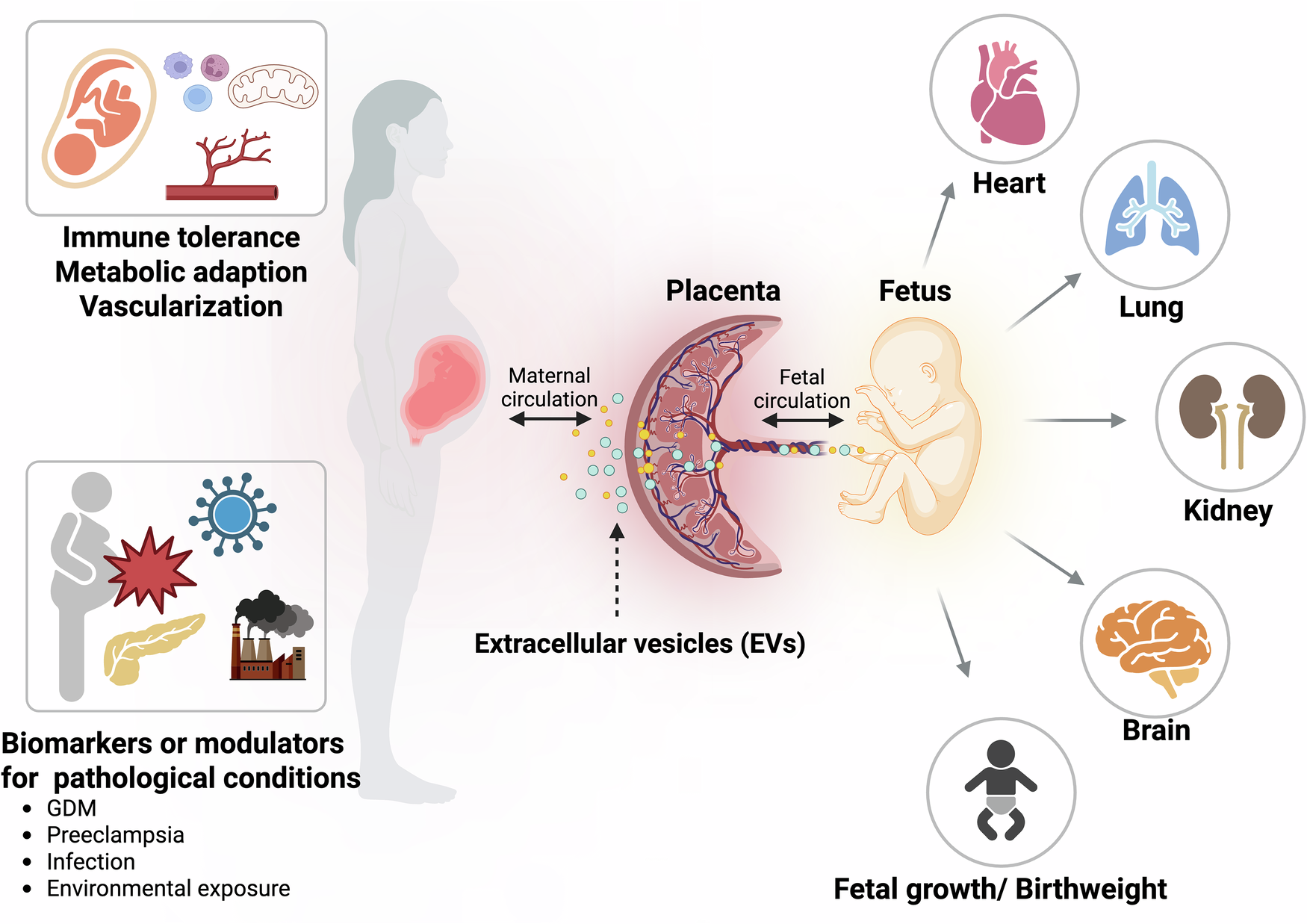
Placenta-derived EVs are actively secreted by trophoblasts and traverse the maternal–fetal interface to modulate both maternal and fetal physiology. In the maternal compartment, EVs contribute to immune tolerance, vascular remodeling and metabolic adaptation. In the fetal compartment, EVs influence organogenesis—including the heart, lungs and kidneys—and impact overall growth trajectories. These vesicles carry diverse cargo such as miRNAs, proteins and small molecules, and their composition dynamically responds to gestational stage and maternal environmental stressors, such as infection or metabolic dysregulation. The figure summarizes major sites of action and known roles of placental EVs in both maternal and fetal health outcomes.
Importantly, the molecular contents of these EVs are not static. As pregnancy progresses, and in response to environmental stressors such as air pollution, infections or chemical exposure, the amount and makeup of the cargo inside placental EVs changes. These alterations can affect fetal organ formation and may contribute to delays in neurodevelopment when the environment is challenging.
The researchers also highlight the technologies researchers are using to isolate, profile and analyze placental EVs and discusses exciting future possibilities, including diagnostic tools and therapies that leverage EVs to monitor or even improve pregnancy outcomes. In sum, placenta-derived EVs are emerging as vital messengers that help orchestrate development and respond to the environment, bridging maternal and fetal health in profound ways.