 Exosome RNA Exosome RNA Research & Industry News

Breast milk is well known for its role in infant nutrition, but researchers at Chung-Ang University have discovered that its benefits extend far beyond nourishment. Their study explores how extracellular vesicles—tiny particles called exosomes found in human breast milk (HBM)—help regulate the immune system and protect gut health.
HBM-derived exosomes were found to influence immune cell function by promoting regulatory T cells (Treg) and Th2 cells, while suppressing pro-inflammatory Th1 and Th17 cells. Additionally, these exosomes stimulated the growth of intestinal epithelial cells and reduced cell death in a model of intestinal damage. In mice with colitis, HBM-derived exosomes significantly improved symptoms, reducing disease severity and restoring immune balance in the gut.
Isolation and characterization of human breast milk (HBM)-derived exosome
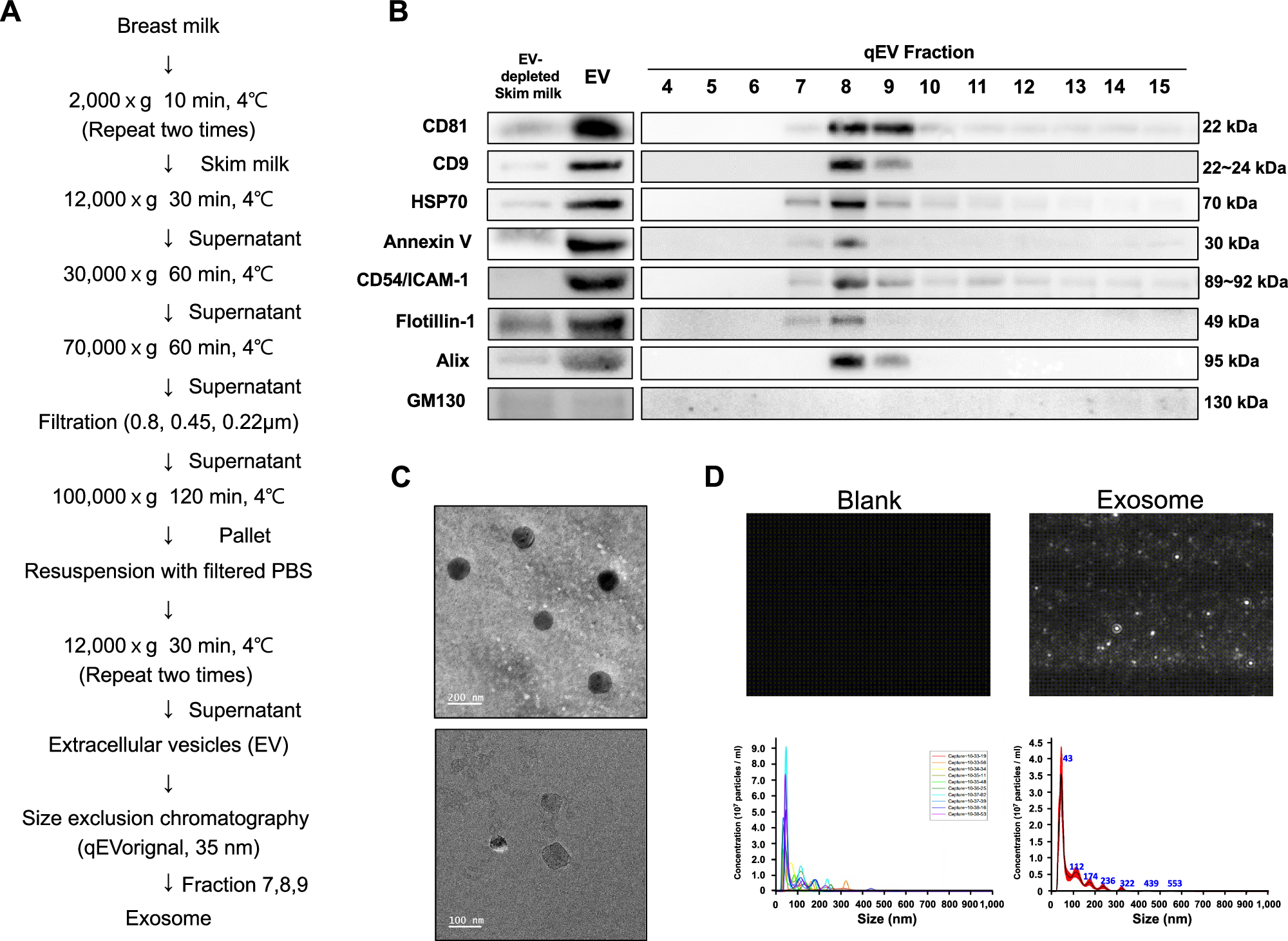
A Overview of HBM-derived exosome isolation using ultracentrifugation and size-exclusion chromatography (SEC). Samples of HBM were pooled to minimize sample variation (n = 10). Initially, 400 mL of HBM was subjected to centrifugation at 2000 × g. The upper layer (milk fat) and the pellet (cells and debris) were discarded. The middle portion, known as skim milk, was isolated and utilized for further processing. The final volume of the extracellular vesicle (EV) sample obtained from the skim milk was 3 mL. To sort exosomes, EVs were classified into 15 fractions according to the size by using the SEC (43.92 ± 4.28 μg/μL, n = 11). B characterization of EVs and exosomes were demonstrated by specific exosome markers, such as CD81, CD9, HSP70, Annexin V, CD54/ICAM-1, Flotillin-1, and Alix, and nonspecific exosome marker, GM130, using western blot. C, D Morphology and size were identified by using transmission electron microscopy (TEM; the scale bar is 200 and 100 nm) and nanoparticle tracking analysis (NTA; median of exosome size = 43 nm, the concentration of exosome = 1.39 × 10⁸ particles/mL).
These findings suggest that HBM-derived exosomes could be developed as a natural therapeutic approach for inflammatory bowel disease (IBD). By modulating immune responses and enhancing intestinal cell survival, they offer a promising avenue for gut health treatments. More research is needed, but this study paves the way for harnessing extracellular vesicles from breast milk to combat chronic inflammatory diseases.


