 Exosome RNA Exosome RNA Research & Industry News

Understanding why some individuals with epilepsy respond well to medication while others do not remains one of the biggest challenges in neurology. A new research project led by researchers from the University of Helsinki takes an innovative approach to this problem, by looking closely at tiny biological packages floating in the brain’s cerebrospinal fluid.
These packages, called extracellular vesicles (EVs), act like microscopic mail carriers. They transport proteins and other molecules between cells, offering clues about what is happening inside the brain. Because EVs can reflect changes in cellular health and communication, scientists are increasingly interested in them as potential biomarkers, measurable indicators that could help diagnose or predict disease.
In this study, the researchers examined dogs with newly diagnosed idiopathic epilepsy. Dogs naturally develop epilepsy much like humans do, making them a valuable model for understanding drug-resistant epilepsy. Before treatment began, the team collected cerebrospinal fluid from each dog and isolated EVs using advanced purification and protein-analysis technologies.
Extracellular vesicle characterisation performed on EVs
isolated by UF-SEC from pooled (4 ml) canine CSF
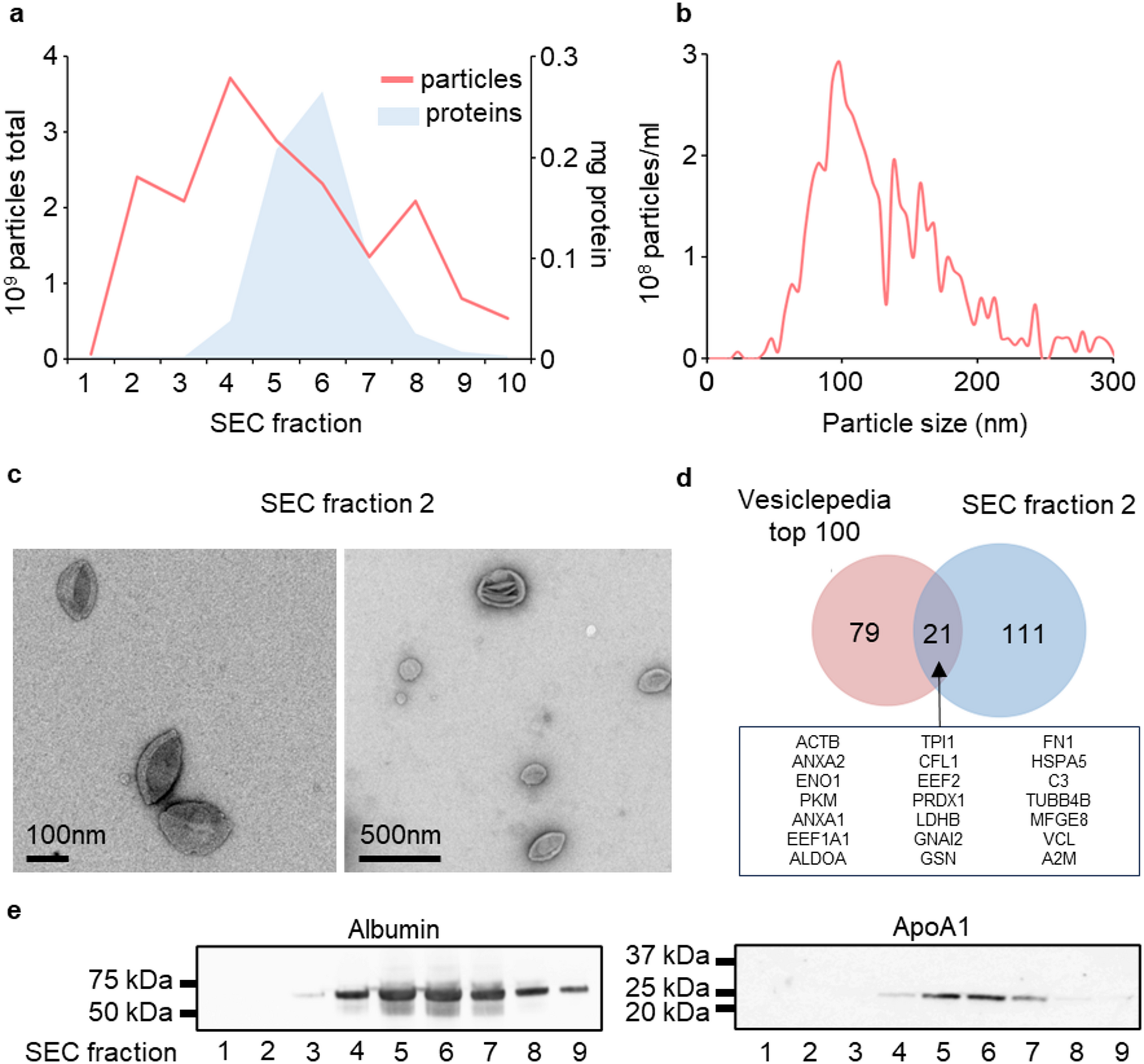
(a) Particle count by NTA and protein quantity by BCA of SEC fractions (500 µl each). (b) Particle size distribution of SEC fraction 2 measured with NTA. (c) TEM images of SEC fraction 2 showing cup-shaped particles typical for EVs (d) Proteins identified with LC-MS/MS in SEC fraction 2 compared with Vesiclepedia’s top 100 EV proteins. (e) Western blot analysis of negative controls albumin and ApoA1 of SEC fractions 1–9. Abbreviations: EV = extracellular vesicle, UF-SEC = ultrafiltration combined with size-exclusion chromatography, CSF = cerebrospinal fluid, NTA = nanoparticle tracking analysis, BCA = bicinchoninic acid assay, TEM = transmission electron microscopy, LFQ = label-free quantification, LC-MS/MS = liquid chromatography-tandem mass spectrometry
After a year of follow-up, the dogs were grouped based on how well they responded to anti-seizure medication. When the scientists compared the EV protein profiles of drug-responsive and drug-resistant dogs, they found that five specific proteins stood out. These proteins, linked to inflammation, neuroprotection, and cell stability, were consistently lower in abundance among drug-resistant dogs. This suggests that reduced activity in these biological processes may contribute to more severe epilepsy or make seizures harder to control.
The team also discovered combinations of three EV-associated proteins that accurately predicted drug resistance, achieving high diagnostic performance in early testing. If validated in larger groups, this kind of analysis could one day help veterinarians and physicians predict which patients may struggle with available medications, opening the door to more personalized treatment strategies.
While much more research is needed, the findings highlight the promise of EV-based biomarkers for improving epilepsy care, both in dogs and potentially in humans.


