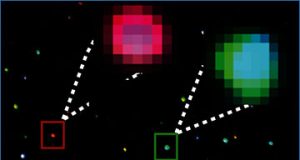
NanoLights will characterize individual extracellular vesicles and nanoparticles to reveal how particle-to-particle differences influence biological function...
Read More »Quantum AI creates a better liquid biopsy for cancer
Quantum machine learning analyzes electrokinetic signatures of extracellular vesicles and exosomes to distinguish cancer-derived particles from healthy ones, offering a fast, label-free approach to earlier...
Read More »Harnessing Sound Waves for Nanoparticle Trapping
Acoustic trapping driven by sound waves and fluid flow enables selective manipulation of nanoparticles and extracellular vesicles in microfluidic systems for biomedical and nanotechnology applications...
Read More »A nonsurgical path to treating pelvic organ prolapse
Researchers at Lehigh University and the Cleveland Clinic are developing a nanoparticle-based therapy that could strengthen or restore the elastic matrix weakened in pelvic organ prolapse. By combining...
Read More »Self-assembling heterodimeric prodrug nanoparticles for dual-targeted cancer therapy
Fucoidan-modified nanoparticles carrying a boronated retinoic acid-based drug disrupt redox balance, degrade Pin1, and selectively kill cancer...
Read More »Extracellular vesicles and nanoparticles: emerging complexities
Extracellular vesicles and newly discovered nanoparticles like supermeres reveal a complex and evolving system of intercellular communication...
Read More »Faster, more sensitive lung cancer detection from a blood draw
Capturing nanoscale ‘packages’ that cancer cells send out, twisting gold nanoparticles use light to distinguish healthy patients from lung cancer patients. A new way of diagnosing lung cancer...
Read More »Advances in imaging strategies for in vivo tracking of exosomes
Exosomes have many biological functions as short- and long distance nanocarriers for cell-to-cell communication. They allow the exchange of complex information between cells, and thereby modulate...
Read More »The challenges and possibilities of extracellular vesicles as therapeutic vehicles
Extracellular vesicles (EVs) are small lipid-enclosed particles that can carry various types of cargo, including proteins, nucleic acids and metabolites...
Read More »Targeted extracellular vesicles for drug delivery – Considerations on methodological and biological heterogeneity
The idea of using extracellular vesicles (EVs) for targeted drug delivery was first introduced in 2011 and has since then gained increasing attention as promising new candidates in the field. Targeting EVs to areas of disease can be achieved through ...
Read More »
Exosome RNA Exosome RNA Research & Industry News