 Exosome RNA Exosome RNA Research & Industry News

Stem cells are well known for their ability to repair damaged tissues, but scientists have discovered that much of their healing power comes from tiny particles they release called extracellular vesicles (EVs). These EVs act like delivery packages, carrying proteins, RNA, and other molecules to nearby cells to help with repair, regeneration, and overall tissue health.
A team led by researchers from Korea University discussed how these vesicles work and how their effectiveness can be improved. A key focus is the protein corona, a dynamic layer of proteins that naturally forms around EVs. This corona can influence how well vesicles are absorbed by cells and how specifically they target certain tissues.
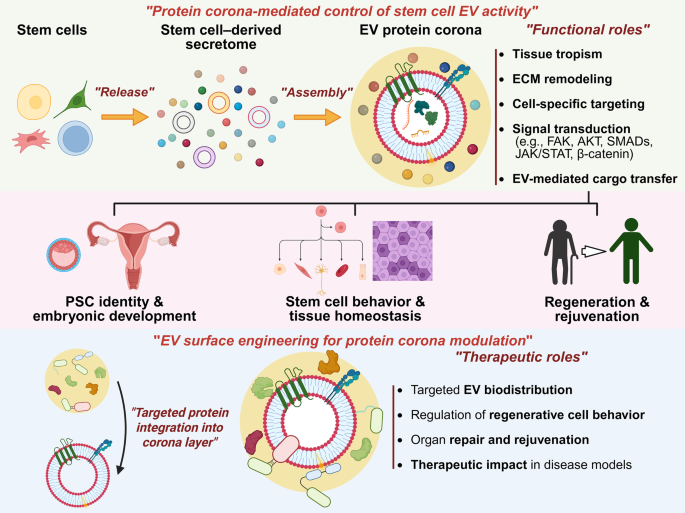
Understanding and even engineering this protein corona could unlock new ways to boost stem cell therapies. By modifying the corona, researchers could make EVs more precise in guiding regeneration, slowing aging processes, and supporting tissue repair, all without needing to transplant entire cells. This approach could lead to safer and more effective treatments in regenerative medicine.


